
Insulin Pumps and CGMs

We provide personalised guidance and practical education on a wide range of diabetes technologies so you can manage your diabetes with greater confidence and safety.
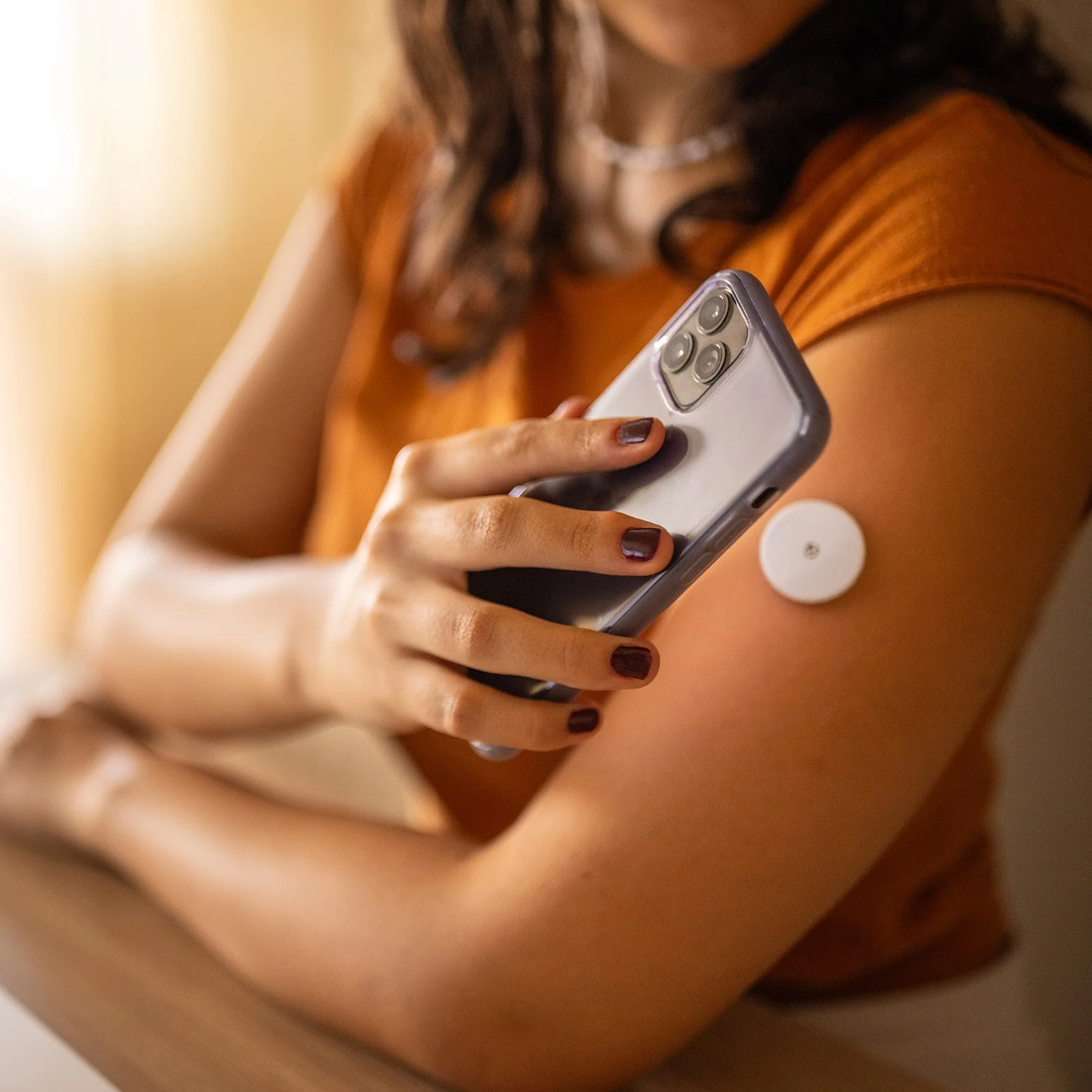
Continuous Glucose Monitors (CGM) We assist with full CGM setup and explain how the system works so you feel comfortable from the first sensor. You’ll learn how to interpret glucose trends and pattern reports, distinguish meaningful signals from noise, and use that information to guide insulin, food and activity choices. We will review alert and alarm settings and help you personalise them to reduce nuisance alarms while preserving safety. Practical skills include sensor insertion techniques, site care and routine maintenance, plus step‑by‑step troubleshooting for common issues such as signal loss, calibration questions and sensor adhesion.
Insulin pumps We support you through device selection and help match pump features to your goals and daily routine. Our education covers basal and bolus setup, including how to establish and titrate basal rates, insulin-to‑carbohydrate ratios, insulin sensitivity factors and correction strategies. You’ll receive hands‑on coaching in infusion set selection and site rotation to reduce skin problems and maintain reliable insulin delivery. We also provide troubleshooting for pump alarms and common delivery issues, with practical tips for problem solving on the go and when to seek urgent care.
Automated Insulin Delivery (AID) systems We offer clear explanations of how different AID systems function, what their algorithms aim to achieve, and how the system’s behaviour can change during sleep, exercise, illness or variable carbohydrate intake. Education includes practical meal strategies, exercise planning and how to use temporary targets or sensitivity adjustments safely. Safety checks and system limitations are emphasised so you understand when manual intervention is needed; we also provide training in manual override procedures and emergency routines so you remain in control even when technology needs support.
Smart pens For people using smart pens or connected insulin pens, we teach dose‑logging practices and how to interpret recorded dosing history to support safer titration. Sessions include guidance on setting and adjusting basal or correction doses, recognising patterns that warrant change, and integrating smart‑pen data with mobile apps or clinic systems. We’ll review your dose records together to identify opportunities for insulin adjustments, reduce missed or duplicate doses, and improve overall insulin use.
DOWNLOADS
Free Resources
Ready to explore your options? We’ve created three free resources (click on the picture below to open PDF) to help you learn about diabetes technology in Australia:
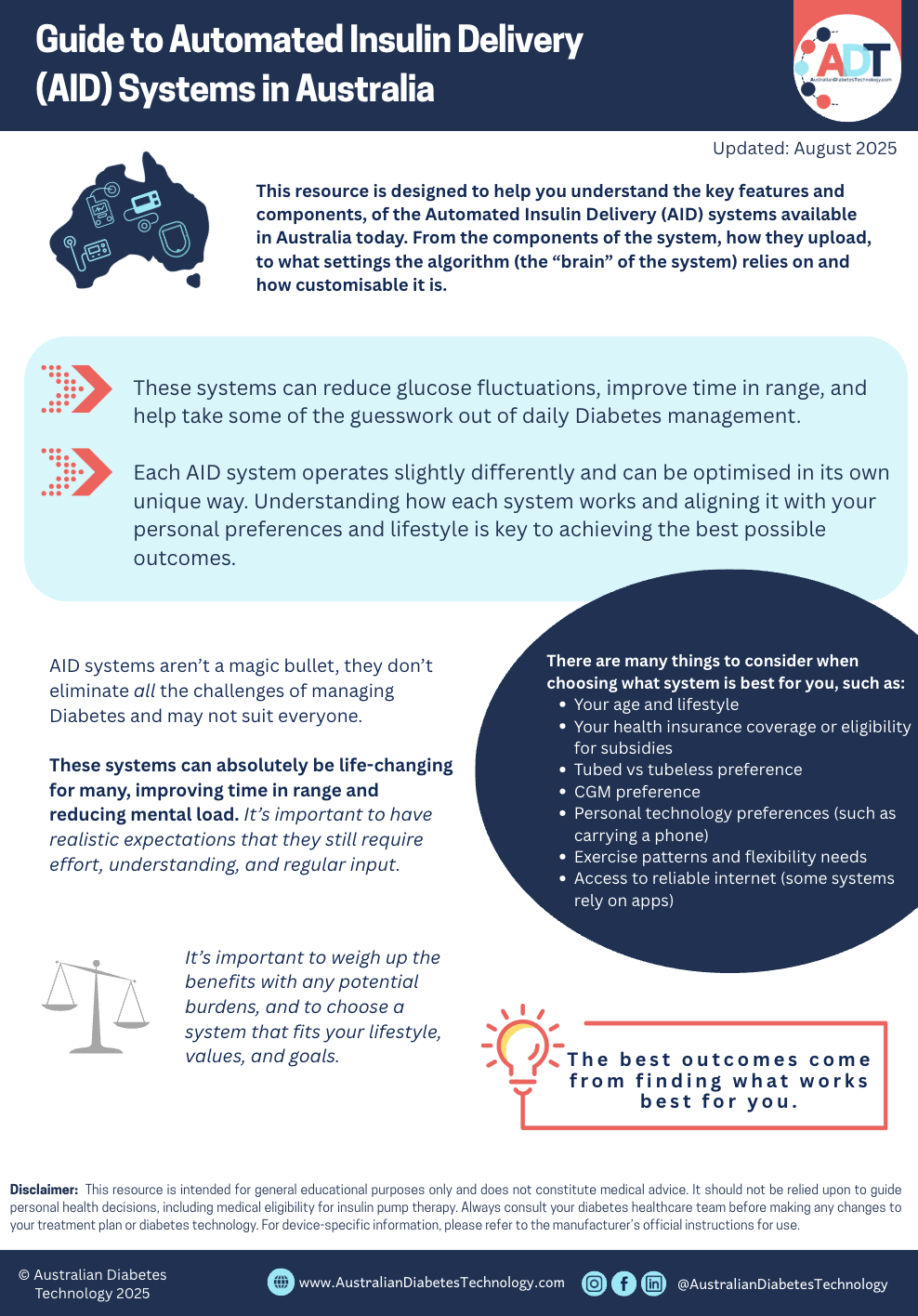
1.
Guide to AID Systems
The Complete Guide to Automated Insulin Delivery (AID) in Australia
Explains how AID systems function, their components, and the differences between available options.
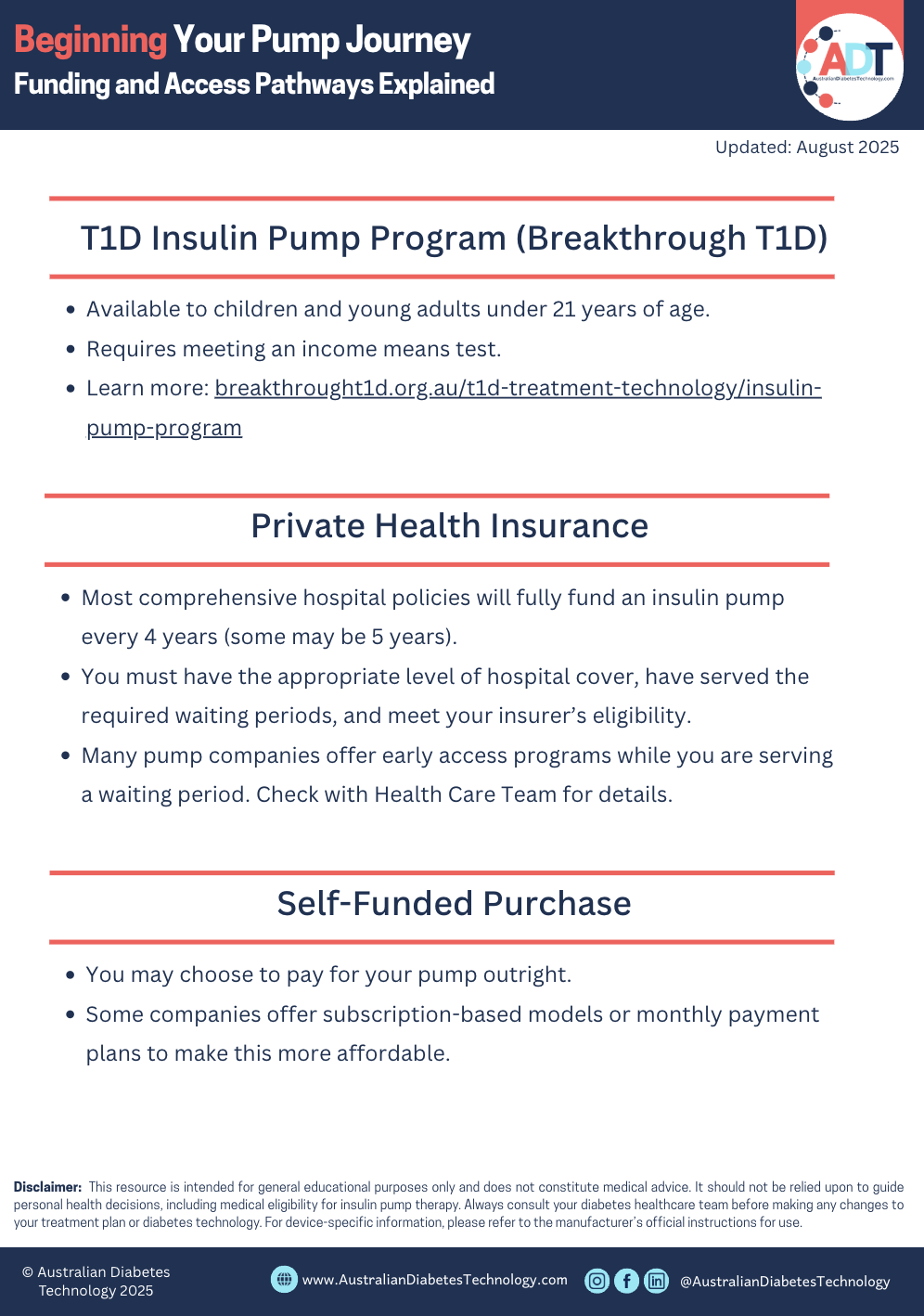
2.
How to Access a Pump & CGM
How to Access and Fund Insulin Pumps & CGMs in Australia
Outlines funding pathways, including Type 1 Breakthrough and private health insurance, and their eligibility criteria.
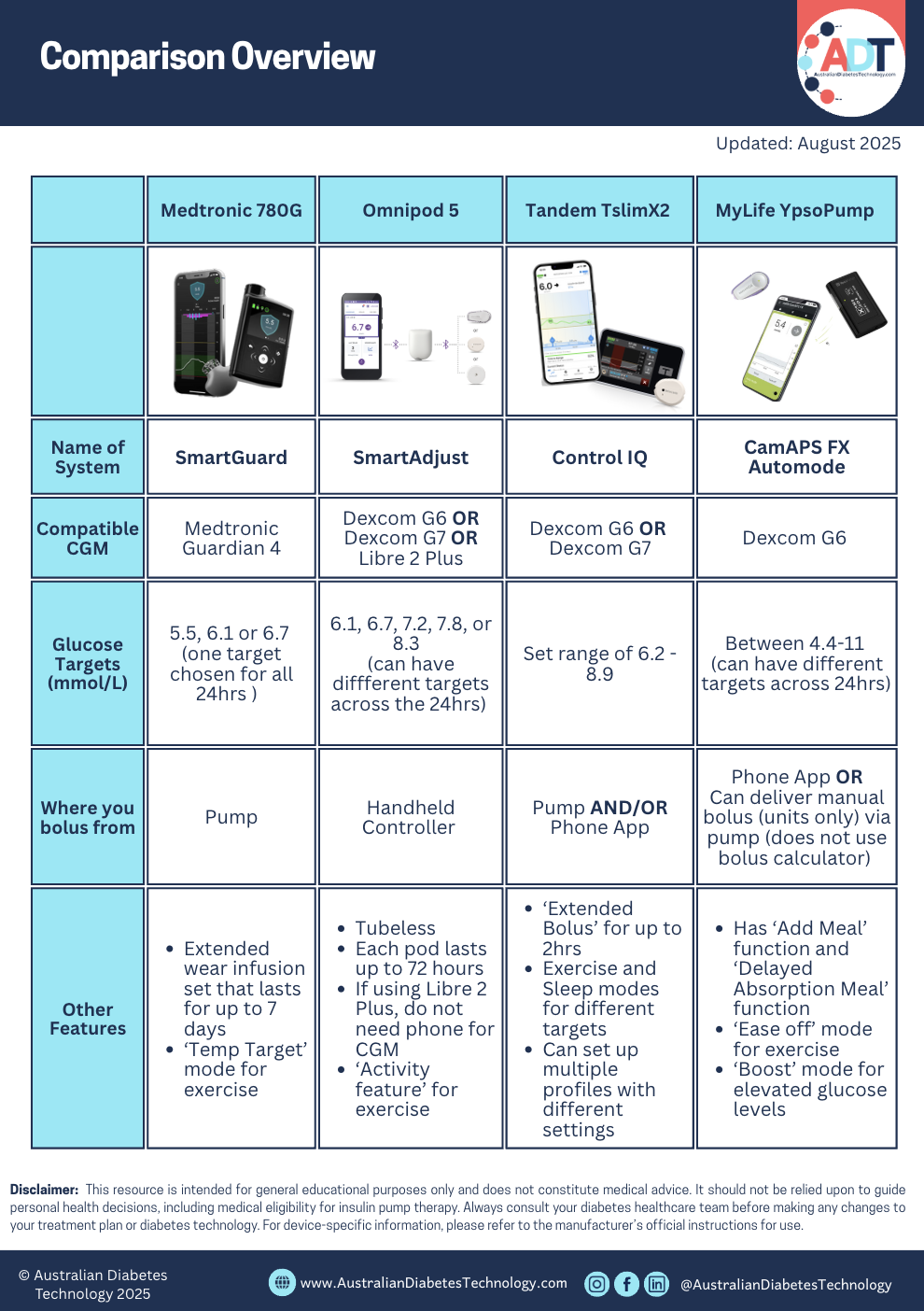
3.
AID Systems
Side-by-Side Comparison Chart of all the AID Systems
A snapshot overview of system features, algorithm settings, CGM compatibility, and more.

CONSULTATION
Personalised guidance
We help you make the most of your insulin pump, continuous glucose monitor (CGM) or automated insulin delivery (AID) system. Whether you’re just starting with diabetes technology or considering an upgrade, our team guides you through every stage — from device selection and setup to personalised settings, troubleshooting and ongoing optimisation. You’ll receive clear, practical education and one‑on‑one support tailored to your lifestyle, age and diabetes type so you understand how your technology works, feel confident using it day to day, and can rely on timely adjustments to improve glucose control and quality of life.